
Transparency is extremely important to us, so we are letting you know that we may receive a commission on some of links you click on from this page. See our disclaimer.
Last week we highlighted the financial benefits that can accrue through a well-run workplace wellness program that helps employees manage emotional wellness — stress, depression, or other mood disorders.
The insights are outlined in the Integrated Benefits Institute report on “Health and Productivity Impact of Chronic Conditions: Depression and Other Mood Disorders.”
As the report states: “Helping employees manage chronic illnesses remains one of the most viable strategies for reducing employers’ healthcare and disability costs. IBI’s Health and Productivity Impact of Chronic Conditions series uses high-quality data to model healthcare, illness absence (i.e., sick days) and disability costs for populations of employees across different industries. The results provide a scalable cost benchmark that employers and their supplier partners can use to assess the potential savings from reductions in the prevalence of a condition, costs of treatments, and illness-related absences and disability leaves.”
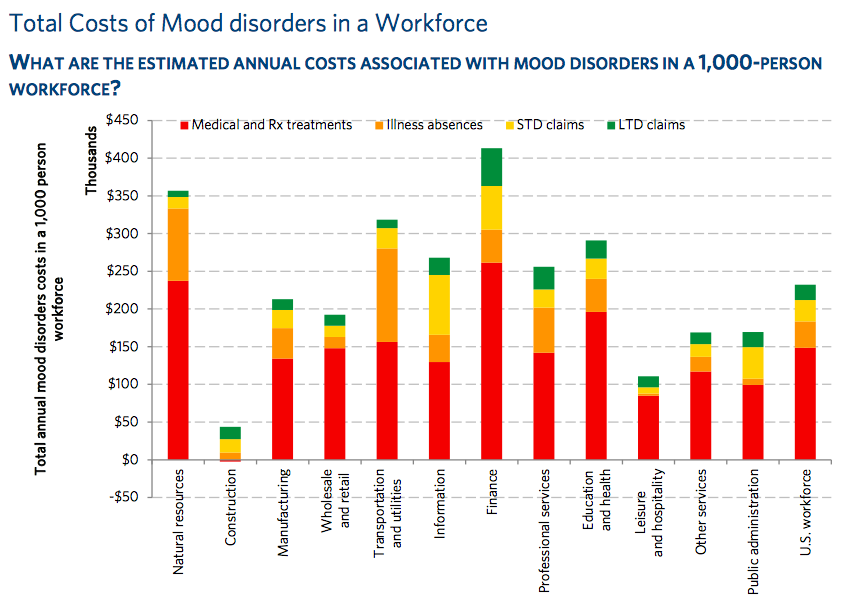
Indeed, this chart that is part of the report makes clear the “Total Costs of Mood disorders in a Workforce.”
Emotional Wellness; Workplace Interventions
But what is the “Evidence for Workplace Interventions?”
According to the report: “Several sources offer good starting points for crafting strategies to manage the full costs of depression. Examples include:”
- “Research suggests that medication and psychotherapy is effective in 70%-80% of depression cases. However, depression tends to be underdiagnosed and undertreated. Providing access to employee assistance programs (EAP) and employing a mental health screener (such as the PHQ-9) that employees can discuss with their regular health care providers may help connect at-risk employees to beneficial care resources.”
- “Occupational therapy has been shown to reduce the duration of temporary disability from work for depression.”
- “Depression management can improve employee’s effective hours worked as a result of better retention and fewer absences.”
This just may be why the report's overview states: “Mood disorders, most commonly diagnosed as depression, not only degrade the quality of employees’ lives — these disorders have business costs for employers and the economy at-large.”




0 Comments